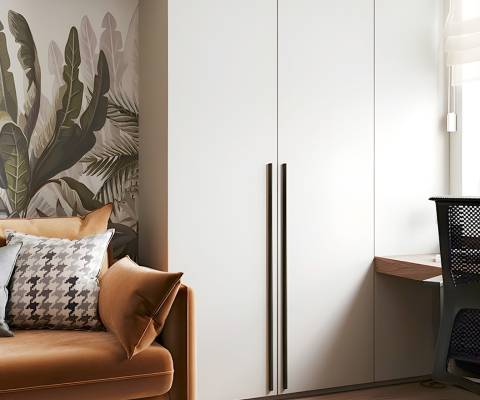
Why PVC Foam Boards Are Gaining Popularity? 5 Reasons to Choose PVC Foam Sheets
April 13, 2026
In today’s construction and interior design industry, the demand for durable, lightweight, and low-maintenance materials is rapidly increasing. Among the most preferred modern materials, PVC foam boards have emerged as a leading choice for architects, interior designers, contractors, and homeowners alike.
Used widely in furniture, signage, modular interiors, and exterior cladding, PVC foam sheets are now replacing traditional materials such as plywood, MDF, and even certain concrete applications.
At ADHAMS, we supply premium-quality PVC foam boards, WPC foam boards, and PVC WPC boards for a wide range of interior & exterior decorative materials applications.
What Are PVC Foam Boards?

PVC foam boards are lightweight, rigid sheets manufactured using polyvinyl chloride (PVC) resin combined with foaming agents and additives. The result is a durable board with a smooth surface, excellent structural strength, and resistance to moisture, termites, and weathering.
These boards are commonly used in:
- Modular furniture
- Kitchen cabinets
- Wardrobes
- Wall cladding
- Signage boards
- Exterior decorative panels
- Ceiling applications
- Partition walls
Why to Choose PVC Foam Sheets over Wood
1. Exceptional Water & Moisture Resistance
One of the biggest advantages of PVC foam boards is their complete resistance to water and moisture.
Unlike plywood or MDF, PVC boards:
- Do not swell when exposed to humidity
- Resist water seepage
- Prevent fungal growth and rot
- Are ideal for kitchens, bathrooms, and exterior applications
This makes them one of the most reliable interior & exterior decorative materials for Indian climate conditions.
2. Superior Durability & Long Lifespan
PVC foam sheets are engineered for longevity. They maintain structural integrity for years without warping, cracking, or deteriorating.
Benefits include:
- High impact resistance
- Excellent dimensional stability
- Long service life
- Resistance to wear and tear
Compared to conventional wood products, PVC foam boards offer significantly better durability in high-use environments.
3. Lightweight Yet Strong
Despite their strength, PVC WPC boards and PVC foam sheets remain lightweight, making them easy to transport, cut, drill, and install.
Advantages include:
- Faster fabrication
- Lower labour costs
- Easy handling on-site
- Suitable for modular and custom applications
Their workability makes them a favourite among fabricators and carpenters.
4. Fire Retardant & Safe for Modern Spaces
Safety is a critical factor in construction and interiors. PVC foam boards offer inherent fire-retardant properties.
They are:
- Self-extinguishing
- Slow to ignite
- Safer than plywood in fire-sensitive applications
This makes them suitable for residential, commercial, hospitality, and institutional projects.
5. Eco-Friendly & Low Maintenance
As sustainability becomes more important, builders are increasingly turning to recyclable and durable materials.
PVC foam boards are:
- Recyclable and environmentally friendlier than timber-based products
- Low maintenance
- Easy to clean
- Resistant to termites and pests
Their long lifespan also reduces replacement frequency, contributing to sustainable construction practices.
Advantages of PVC Foam Board Over Wood
| Feature | Wood | PVC Foam Board |
| Water Resistance | Low | Excellent |
| Termite Resistance | No | Yes |
| Fire Resistance | No | Yes |
| Weight | Heavy | Lightweight |
| Maintenance | High | Low |
| Dimensional Stability | Warps/Expands | Stable |
| Cost Over Time | Higher | More Economical |
| Durability | Moderate | High |
Why PVC Foam Boards Are Gaining Popularity?

1. PVC Foam Boards Are Moisture & Mildew Resistant
One of the most important reasons behind the rising demand for PVC foam boards is their excellent resistance to moisture.
Unlike wood-based boards that absorb water over time, PVC foam boards feature a closed-cell non-absorbent core, which means they do not soak up moisture.
Benefits:
- Ideal for kitchens and bathroom vanities
- Perfect for balconies and semi-outdoor spaces
- Prevents swelling, warping, and rotting
- Reduces mould and mildew formation
- Lowers cleaning and maintenance costs
2. PVC Foam Boards Are Lightweight & Easy to Handle
PVC foam sheets are significantly lighter than many conventional board materials.
Typical density comparison:
- Solid PVC Sheet: 1.35–1.45 g/cm³
- PVC Foam Board: 0.45–0.60 g/cm³
This means PVC foam boards can weigh half or even one-third of solid PVC sheets.
Advantages:
- Easier transportation
- Simplified installation
- Reduced labour effort
- Better for overhead and wall-mounted applications
3. PVC Foam Boards Are Easy to Work With
Fabricators and carpenters prefer PVC foam boards because they can be processed using standard woodworking tools.
Processing Options:
- Sawing
- Drilling
- CNC Cutting
- Screwing
- Nailing
- Grooving
- Edge Banding
- Lamination
- Surface Sanding
- Hot Bending
This makes PVC WPC boards and PVC foam sheets highly versatile for custom interior fabrication.
4. Corrosion Resistant & Fire Retardant
Unlike wood, PVC foam boards do not decay due to moisture, chemicals, termites, or microbial attack.
Additional Safety Benefits:
- Self-extinguishing fire performance
- Flame-retardant properties
- Resistant to acids and alkalis
- Suitable for commercial and industrial interiors
This makes them a safer and more durable choice than plywood for many applications.
5. High-Density PVC Foam Sheets Offer Better Strength
PVC foam boards are available in multiple density options depending on application requirements.
Density Ranges:
- 0.45–0.55 g/cm³: Lightweight applications
- 0.60–0.75 g/cm³: High-strength applications
- Up to 1.1 g/cm³: Heavy-duty custom requirements
Higher-density boards provide:
- Better screw holding
- Improved impact resistance
- Enhanced durability
- Greater structural stability
PVC Boards Price Considerations
The price of PVC foam boards depends on:
- Thickness
- Density
- Surface finish
- Fire-retardant additives
- UV resistance enhancements
- Brand/manufacturer quality
While PVC foam boards may have a slightly higher upfront cost than low-grade plywood, they offer better long-term value due to reduced maintenance and replacement costs.
Applications of PVC Foam Boards in Modern Interiors & Exteriors
One of the key reasons PVC foam boards have become so popular is their exceptional versatility. Their lightweight structure, moisture resistance, durability, and easy fabrication make them suitable for a broad range of residential, commercial, and industrial applications.
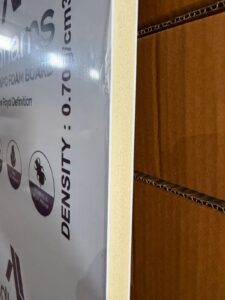
Whether you are designing a luxury interior or specifying durable exterior decorative materials, PVC foam boards, WPC foam boards, and PVC WPC boards offer practical and aesthetic advantages across multiple use cases.
1. Modular Kitchen Cabinets & Shutters
PVC foam boards are extensively used in modular kitchen manufacturing due to their waterproof and termite-proof properties.
Why They Work Well:
- Resistant to kitchen moisture and steam
- Prevent swelling near sinks and dishwashers
- Easy to laminate and finish
- Long-lasting in humid environments
They are ideal for:
- Base cabinets
- Overhead cabinets
- Shutters
- Drawer units
- Pantry storage systems
2. Bathroom Vanities & Wet Area Furniture
Bathrooms require materials that can withstand constant humidity and water exposure.
PVC foam sheets are excellent for:
- Vanity cabinets
- Mirror frames
- Storage units
- Partition panels
Unlike plywood, they do not deteriorate in wet conditions.
3. Wardrobes & Bedroom Furniture
Modern wardrobes and bedroom storage systems increasingly use PVC WPC boards and PVC foam sheets.
Applications include:
- Wardrobe carcasses
- Sliding wardrobe shutters
- Internal shelving
- Dressing units
- Loft storage cabinets
Their dimensional stability ensures furniture remains straight and warp-free over time.
4. Decorative Wall Panels & Cladding
PVC foam boards are widely used as premium interior decorative materials for wall treatments.
Suitable for:
- TV feature walls
- Bedroom accent walls
- Lobby wall cladding
- Office reception backdrops
- Decorative partitions
They can be laminated, painted, grooved, or CNC-cut for custom design aesthetics.
5. False Ceilings & Ceiling Panels
Due to their lightweight nature, PVC foam boards are ideal for suspended and decorative ceiling products applications.
Common uses:
- False ceiling panels
- Decorative ceiling grids
- Moisture-resistant ceiling boards
- Washroom ceiling systems
Their water resistance makes them superior to gypsum in humid spaces.
6. Office Partitions & Commercial Interiors
Commercial interiors require durable and easy-to-maintain materials.
PVC foam boards are used in:
- Cabin partitions
- Workstation dividers
- Conference room panels
- Decorative office partitions
- Retail fit-outs
Their smooth surface also supports branding graphics and laminates.
7. Exterior Decorative Cladding
UV-enhanced and weather-resistant PVC WPC boards can be used for exterior decorative applications.
Ideal for:
- Facade cladding
- Balcony panelling
- Terrace decorative walls
- Semi-outdoor partitions
- Exterior soffits
This makes them valuable interior & exterior decorative materials for modern architecture.
8. Signage & Advertising Boards
PVC foam boards are one of the most widely used materials in the signage industry.
Applications include:
- Indoor signboards
- Outdoor signboards
- Exhibition panels
- POP displays
- Retail branding displays
- Hoardings and promotional boards
Their smooth printable surface makes them ideal for UV printing and vinyl application.
9. Doors & Partition Systems
PVC foam boards can also be used in lightweight door and partition fabrication.
Used for:
- Bathroom doors
- Utility room doors
- Lightweight office doors
- Partition wall systems
They offer better moisture resistance than wood-based alternatives.
10. Industrial & Specialty Applications
High-density PVC foam sheets are also used in industrial environments.
Applications include:
- Machine covers
- Protective barriers
- Chemical-resistant partitions
- Cleanroom panelling
- Insulation and enclosure systems
As the demand for advanced decorative materials grows, architects and designers continue to adopt PVC foam boards because they combine:
- Structural reliability
- Design flexibility
- Low maintenance
- Long service life
- Superior weather resistance
This makes them one of the most adaptable interior & exterior decorative materials available today.
Why Choose ADHAMS for PVC Foam Boards?
At ADHAMS, we supply premium-grade:

- PVC Foam Boards
- WPC Foam Boards
- PVC WPC Boards
- Interior & Exterior Decorative Materials
Designed for durability, aesthetics, and performance across residential and commercial applications.PVC foam boards are transforming the way modern interiors and exteriors are designed. Their moisture resistance, durability, fire safety, and low maintenance make them one of the smartest alternatives to traditional building materials.
Whether you’re designing modular furniture, decorative wall panels, or exterior cladding, PVC foam boards provide the perfect balance of performance and aesthetics.Explore premium decorative material solutions with ADHAMS and upgrade your next project with materials built for the future.
FAQs
1.Is PVC foam sheet waterproof?
Yes, PVC foam sheets are fully water-resistant and ideal for wet areas like kitchens and bathrooms.
2. Is PVC foam strong?
Yes, especially high-density PVC foam boards offer excellent impact resistance and durability.
3. What is the difference between PVC board and PVC foam board?
PVC foam board has a foamed closed-cell core, making it lighter and easier to fabricate than solid PVC board.
4. What is the difference between WPC PVC board and PVC foam board?
WPC PVC boards combine wood-plastic composite properties, while PVC foam boards are pure PVC-based lightweight rigid boards.
5. Can PVC foam boards replace plywood?
Yes, PVC foam boards are an excellent modern alternative to plywood in many applications.
6. Are PVC foam boards termite-proof?
Yes, they are 100% termite and pest resistant.
7. Are PVC foam boards fire resistant?
Yes, PVC foam boards are self-extinguishing and flame-retardant.
8. Can PVC foam boards be used outdoors?
Yes, UV-enhanced PVC foam boards are suitable for outdoor and semi-outdoor use.
9. Which thickness of PVC foam board is best for furniture?
Typically 8mm–18mm boards are used for furniture and cabinetry.
10. How long do PVC foam boards last?
High-quality PVC foam boards can last decades with proper installation and maintenance.

